

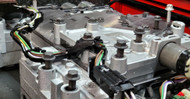
Transmission Pressure vs. Flow
When a transmission fails, most diagnostics start in the same place: pressure readings. If the gauge checks out, it’s easy to assume everything is fine. But that assumption is exactly where costly mistakes begin.
Because here’s the truth most shops and drivers overlook: pressure is only half the story. Flow is what actually keeps your transmission alive.
This article breaks down why pressure isn’t the same as flow, how this misunderstanding leads to premature transmission failure, and what you should be watching instead.
Why Pressure Alone Doesn’t Tell the Full Story
Pressure measures force. It tells you hydraulic energy is available.
But flow? Flow determines how quickly and effectively that force is delivered throughout the transmission.
You can have perfectly normal, even elevated, pressure readings and still be headed toward failure.
That’s because pressure doesn’t move components. Fluid flow does.
According to transmission diagnostics principles outlined by resources like ATSG (Automatic Transmission Service Group), proper fluid dynamics inside a transmission depend on both pressure and volume moving through the system. When flow is compromised, internal components don’t receive the fluid they need in time, even if pressure looks fine.
What Actually Controls Transmission Flow
Flow isn’t random. It’s influenced by several key components and conditions inside the transmission:
1. Pump Condition and Clearances
Wear inside the pump reduces its ability to move fluid efficiently. Even if pressure remains stable, flow volume can drop.
2. Valve Body Wear and Leakage
Internal leaks in the valve body redirect fluid away from critical circuits. This is one of the most common hidden causes of flow loss.
3. Separator Plate Cross Leaks
Small breaches in the separator plate allow fluid to escape between circuits, weakening flow where it’s needed most.
4. Debris and Restrictions
Contaminants can clog passages or filters, choking fluid movement.
For deeper technical insight into hydraulic flow behavior, you can reference fluid system fundamentals from Machinery Lubrication, a trusted authority on lubrication and system performance.
What Happens When Flow Drops
When flow is reduced, the transmission doesn’t immediately fail. Instead, it starts a slow and destructive chain reaction.
Slower Clutch Engagement
Clutch packs rely on fluid volume to apply quickly. Reduced flow causes delayed engagement.
Increased Slip
Delayed engagement leads to slipping, one of the fastest ways to destroy friction materials.
Heat Generation
Slip creates heat. Heat breaks down transmission fluid and damages internal components.
According to AA1Car, excessive heat is responsible for nearly 90% of transmission failures, often caused by poor fluid circulation.
Real World Warning Signs Most Shops Miss
By the time harsh shifting or flaring shows up, the damage has already been building.
Here’s what experienced technicians should be watching for:
- Burnt fluid odor
- Discolored steels
- Vehicles with towing history or added power
- Overheating complaints under load
Higher ambient temperatures and heavy towing loads accelerate failure by exposing weaknesses in cooling and flow systems.
Visual Breakdown: Pressure vs. Flow Impact
| Factor | Pressure OK | Flow Reduced |
|---|---|---|
| Gauge Readings | Normal | Often Normal |
| Clutch Apply Speed | Fast | Delayed |
| Heat Generation | Low | High |
| Wear Rate | Minimal | Accelerated |
| Failure Risk | Low | High |
Why This Problem Is Getting Worse
Modern transmissions are more sensitive than ever.
With tighter tolerances, higher operating temperatures, and increased demands from towing and performance tuning, even small flow issues can quickly escalate.
Add in extended service intervals and degraded fluid, and you have a perfect storm.
Data from Statista shows increasing vehicle longevity trends, which means more transmissions are operating beyond their optimal service life, amplifying the importance of proper fluid dynamics.
The Takeaway: Timing Matters More Than Force
Pressure tells you force is available.
Flow determines how quickly that force is applied.
And in a transmission, timing is everything.
A system with strong pressure but weak flow is like a heart with high blood pressure but poor circulation. It looks fine on the surface but fails where it matters most.
How to Prevent Flow Related Failures
If you want to extend transmission life and avoid costly rebuilds:
- Don’t rely solely on pressure tests
- Inspect valve body wear and separator plates
- Replace clogged filters and degraded fluid
- Pay attention to heat and load conditions
- Investigate early signs like delayed engagement
Using advanced diagnostic tools like Sonnax components or upgrades can also help restore proper hydraulic integrity and improve flow performance.
Final Thoughts
Transmission failure rarely happens suddenly. It builds over time, quietly, while everything appears normal.
Understanding the difference between pressure and flow gives you a major advantage. It helps you catch problems earlier, diagnose more accurately, and ultimately protect one of the most expensive systems in any vehicle.
Because in the end, it’s not just about having power.
It’s about delivering it at the right time.